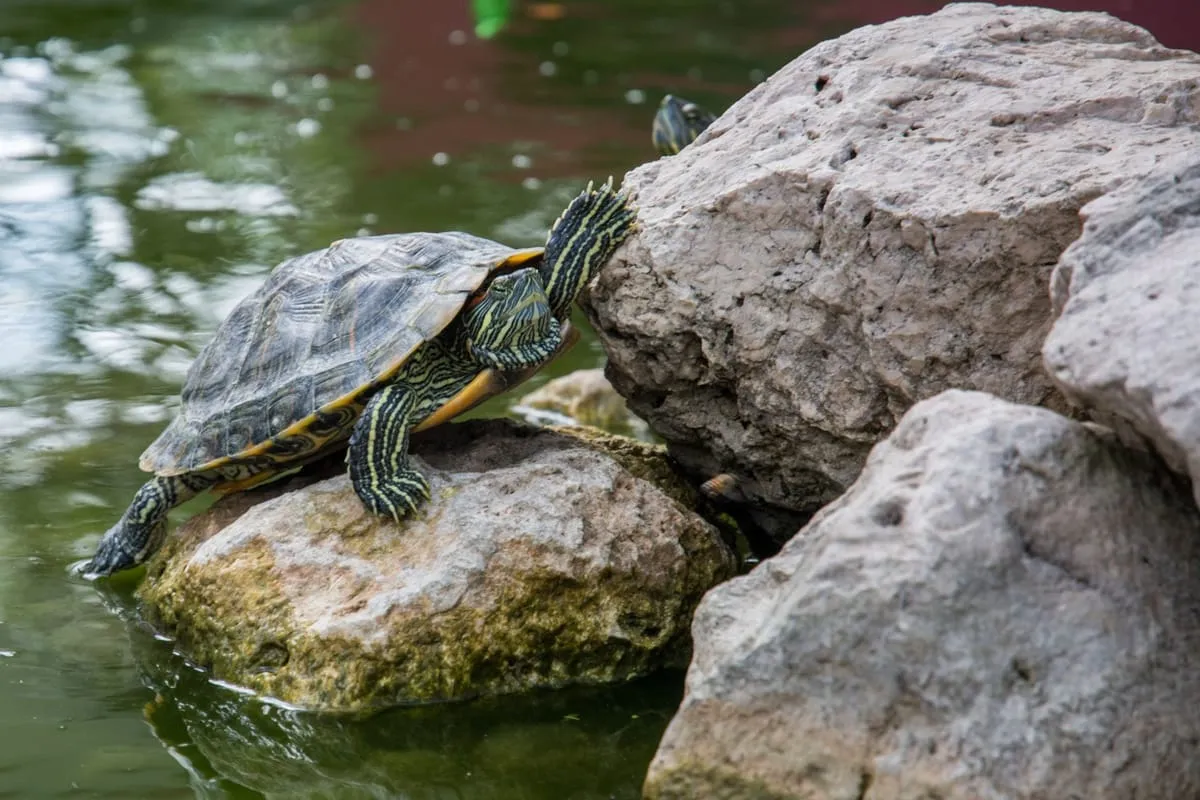
Turtles get bought the way tortoises do, as a slow, easy, almost decorative pet, and the two end up confused constantly because they look related and both carry a shell. A pet turtle is neither slow-maintenance nor tortoise-adjacent in what it actually needs. An aquatic turtle like the red-eared slider, by far the most commonly kept species, lives most of its life swimming in a genuine body of filtered water, grows far larger than the coin-sized hatchling it starts as, and can easily outlive the person who buys it. Here is what one actually needs, and why so many end up outgrowing their owner’s expectations rather than the other way round.
Turtle, not tortoise, and the setups are almost opposite
The confusion is understandable and it causes real harm, so it is worth clearing up first.
A tortoise is a land animal built to graze on a dry, walkable enclosure, as covered in our tortoise care guide. A pet turtle like a red-eared slider, painted turtle, or map turtle is aquatic, spending the overwhelming majority of its time swimming, and needs a real tank of water deep enough to swim in fully, not a shallow dish. It still needs to climb out and dry off completely to bask, which is where the two animals’ needs briefly overlap, but everything else about the setup runs in the opposite direction: water and filtration instead of substrate and floor space. Buying turtle care advice for a tortoise, or the reverse, sets the animal up to fail from day one.
The water setup most owners underestimate
This is where a turtle differs most sharply from almost any other reptile, and where the budget and effort genuinely need to go.
A single adult red-eared slider needs roughly 75 to 100 gallons of water once grown, since these turtles commonly reach 8 to 12 inches in shell length and need genuine swimming room, not a tank they can barely turn around in. Turtles are also messy by nature, eating in the water and producing a lot of waste there, so filtration needs to be well above what a fish tank of the same size would run, typically a canister filter rated for several times the actual water volume. Partial water changes on top of that filtration are not optional extras, they are the difference between clear water and a tank that clouds and smells within days.
On top of the water, every aquatic turtle needs a dry basking area it can climb out onto completely, such as a floating turtle dock, positioned under its own heat and UVB lighting. A turtle that cannot get fully out of the water and dry off is at real risk of shell and skin problems, so the dock is not a decorative extra, it is one of the two zones the whole enclosure is built around.
Feeding shifts as they grow
Diet is one area where a turtle’s needs actually change substantially over its life, which catches new owners out.
Juvenile aquatic turtles are considerably more carnivorous, eating a diet weighted toward protein such as feeder fish, insects, and a quality commercial turtle pellet, to fuel rapid early growth. As they mature into adults, most commonly kept species shift toward a diet with proportionally more aquatic plants and vegetables, with protein still included but no longer dominating every meal. A calcium source such as a floating turtle bone left in the water gives a turtle free-choice calcium to gnaw at alongside its regular food, which matters for shell and bone health in the same way calcium dusting matters for a lizard.
Overfeeding protein into adulthood is a common, avoidable mistake, and it is linked to excess shell growth and fat buildup in turtles kept this way for years.
Shell and health basics worth knowing
A turtle’s shell is living bone covered in scutes, not armour, and it needs to be checked periodically rather than assumed fine because it looks solid. Soft spots, a strong odour, or flaking scutes that reveal red or raw tissue underneath can point to shell rot, usually linked to consistently dirty water, and it needs a vet who treats reptiles rather than home treatment. Puffy or swollen eyes that a turtle cannot fully open are a classic sign of vitamin A deficiency from an unbalanced diet, and laboured breathing or a turtle that floats lopsided in the water both point toward a respiratory infection, which fits the same pattern covered in signs of a respiratory infection in reptiles.
Who a pet turtle actually suits
A pet turtle suits someone with the space and budget for a genuinely large, well-filtered aquatic setup, the patience for regular water changes, and a realistic view of a 20 to 30 year commitment that will need a bigger tank at least once along the way. It is a poor fit for anyone drawn in by a small, cheap hatchling in a tiny tank without having priced out the full-size adult setup, or anyone expecting a low-effort pet simply because it moves slowly and does not need walks. Get the water, the filtration, and the heat and UVB right, and a pet turtle rewards its keeper with one of the most genuinely engaging reptiles to watch, alert, food-motivated, and very obviously aware of the person feeding it, for decades to come.
Common questions
- How big a tank does a pet turtle need?
- Far bigger than the small tanks turtles are usually sold with. A single adult red-eared slider, one of the most common pet turtles, needs on the order of 75 to 100 gallons of water once fully grown, since these turtles commonly reach 8 to 12 inches and need room to swim, not just float. Undersized housing is one of the most common reasons pet turtles end up stressed, sick, or surrendered.
- Is a turtle the same as a tortoise?
- No, and mixing them up leads to real welfare problems. Tortoises are land animals that graze and need a dry, walkable enclosure. Turtles covered here are aquatic, spending most of their time swimming and needing a genuine body of water with filtration, plus a dry basking spot to climb out onto. The two need almost opposite setups, so care advice for one does not transfer to the other.
- How long do pet turtles live?
- A well-kept red-eared slider commonly lives 20 to 30 years, and some individuals live longer. This is a multi-decade commitment on the scale of a tortoise or a large parrot, not a short-lived starter pet, and it is a major reason so many pet turtles end up rehomed or released once the novelty fades and the tank is still not big enough.
- Do turtles need both a heat lamp and UVB?
- Yes. A basking turtle needs a UVB bulb to make vitamin D3 for calcium absorption, exactly like a basking lizard, plus a separate heat bulb over the dry dock so its basking spot actually reaches the warm, dry temperature it needs to bask properly. The water itself also needs its own submersible heater kept at a stable, species-appropriate temperature, so a turtle setup runs three separate pieces of equipment where a lizard tank might run two.