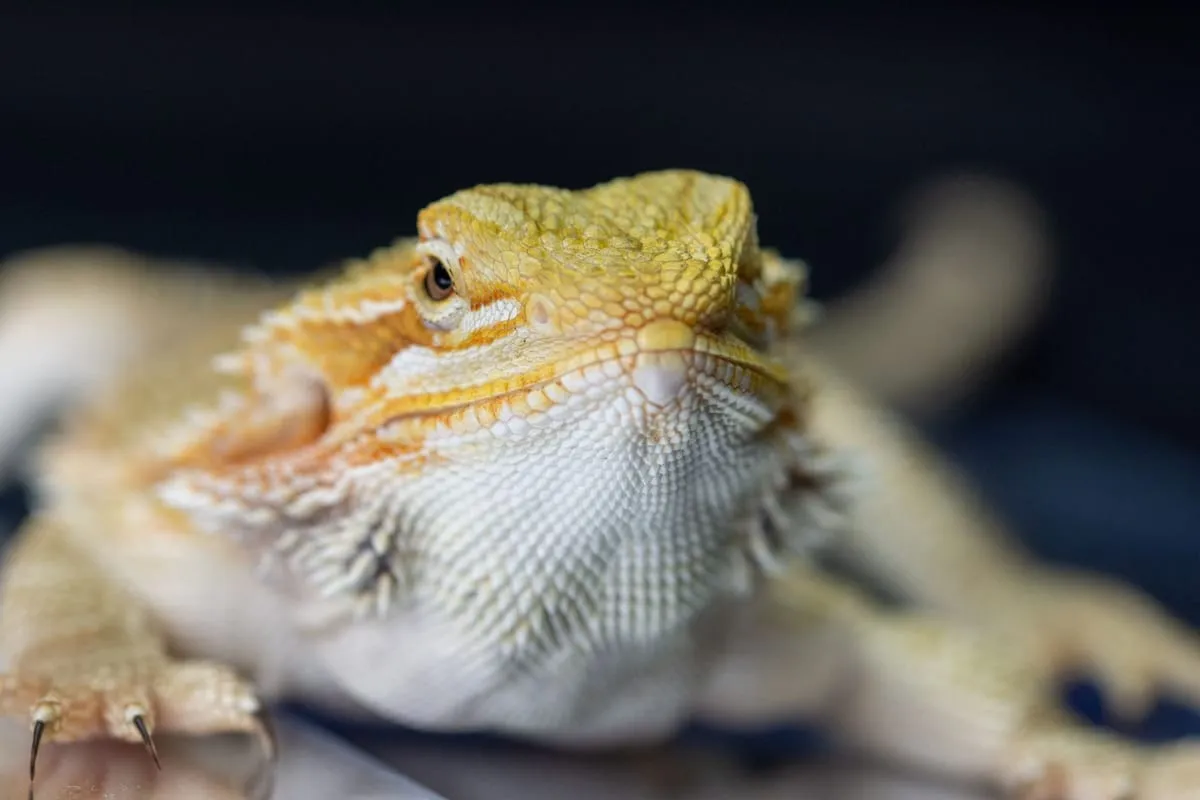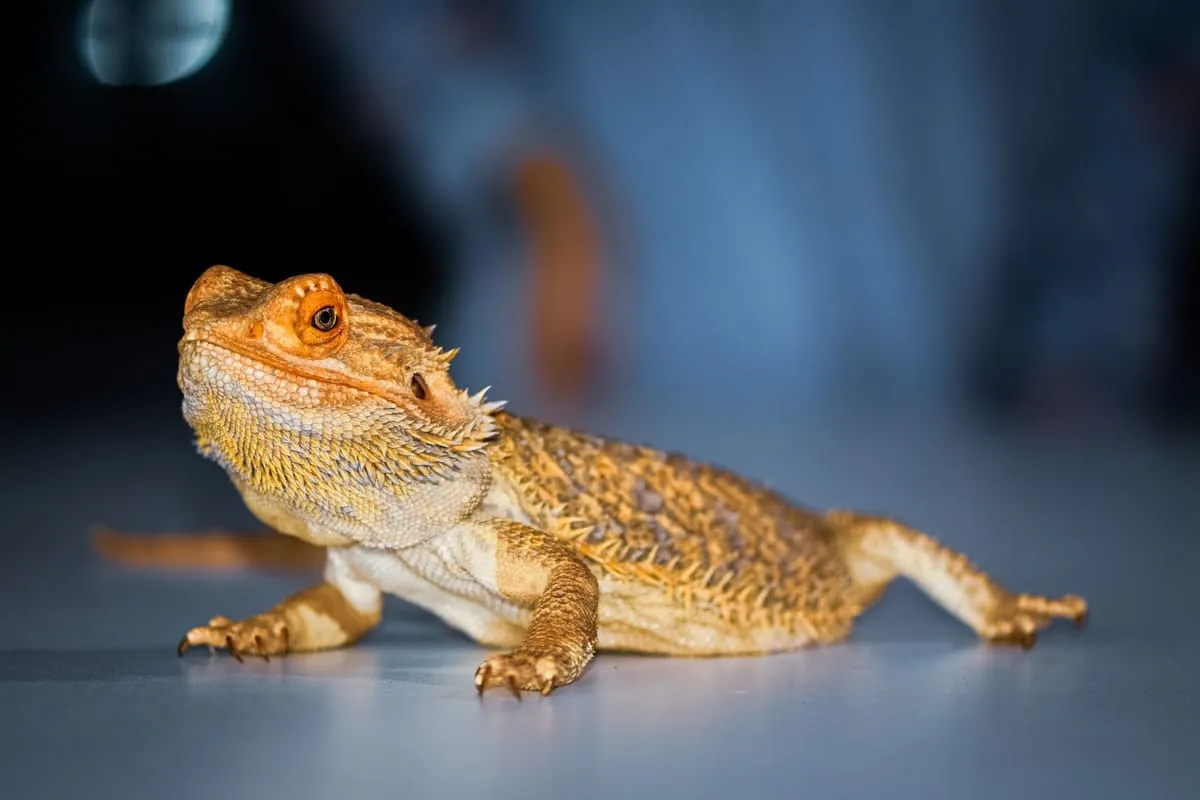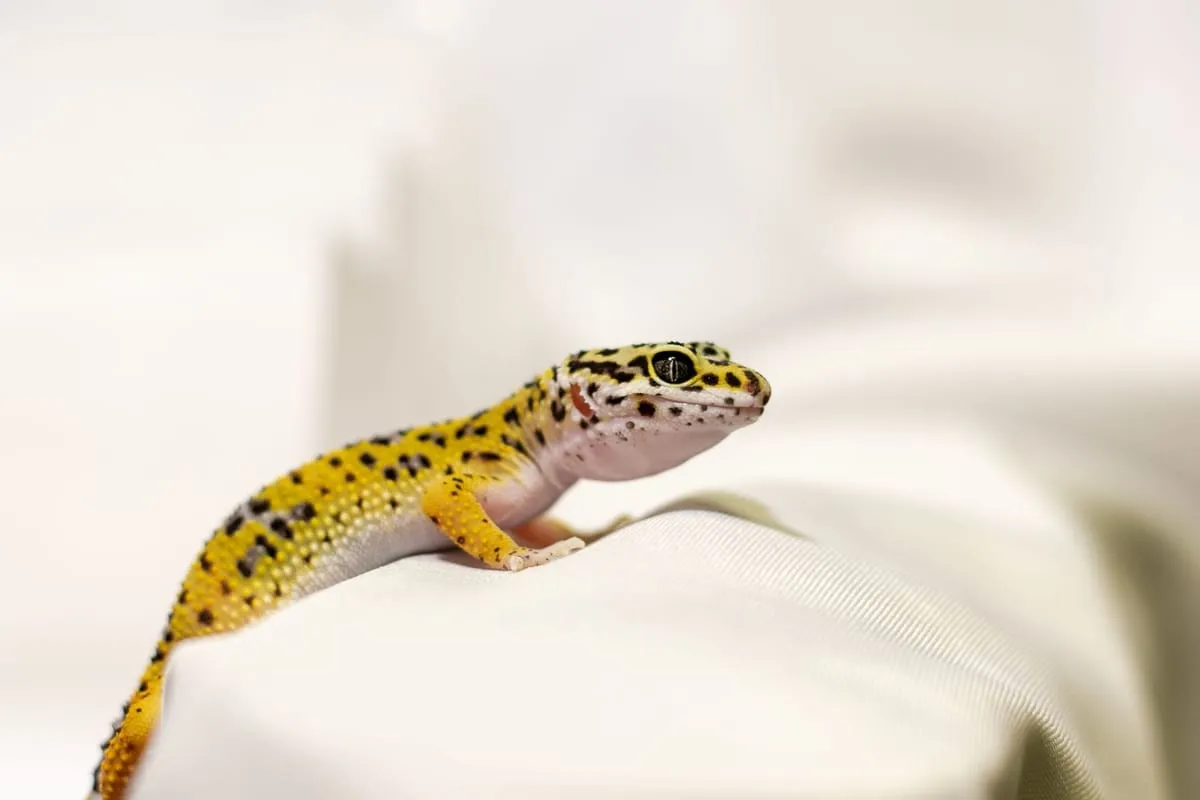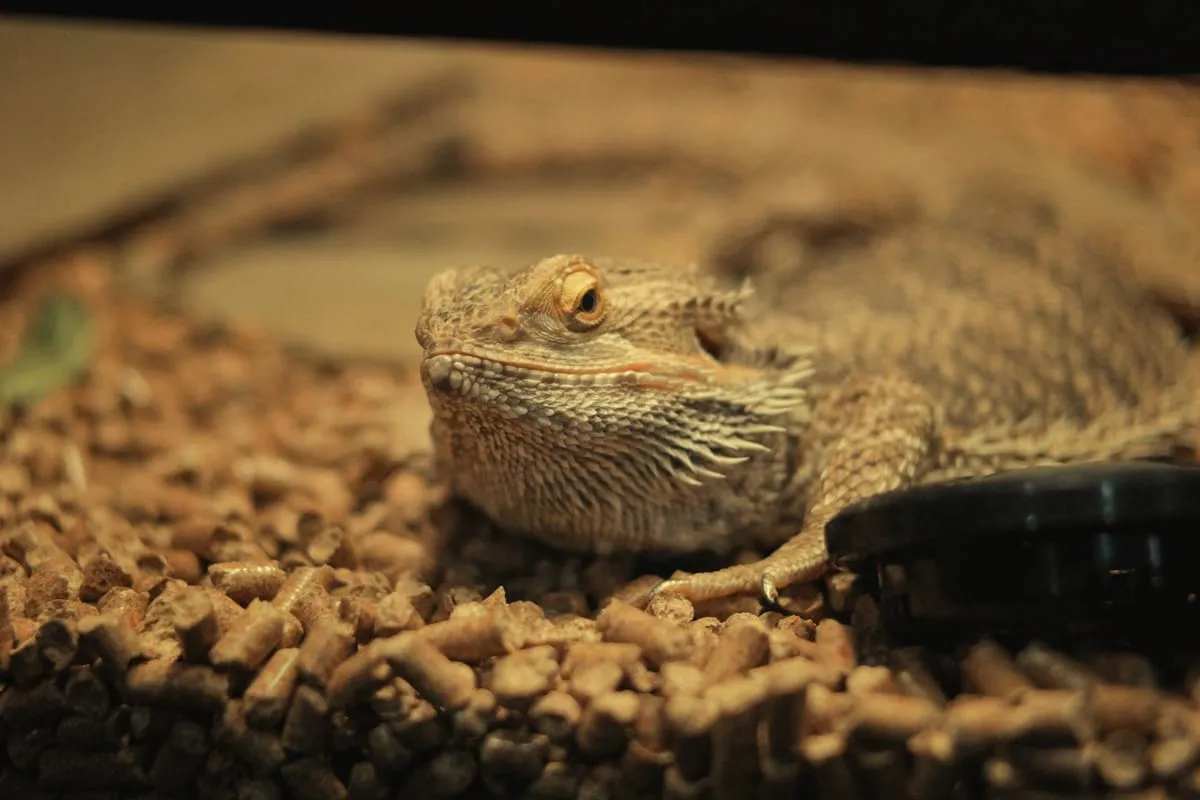
A reptile that has stopped passing waste, is straining without result, or has developed a firm, unmoving swelling low in its belly may have a gut blockage, known as impaction. It is one of the more common serious health problems in captive reptiles, and it is also one of the more preventable ones, because in most cases the cause sits in what is on the floor of the enclosure rather than in bad luck.
What impaction actually looks like
The signs cluster around a gut that has stopped moving things through properly.
A reptile that has gone noticeably longer than its own normal pattern without passing waste is the first thing to watch for, alongside straining or pushing with no result. A firm, hard swelling low in the belly that does not move or soften is a stronger sign than a generally rounded stomach, which can just mean a recent big meal. Reduced or absent appetite, lethargy, and less interest in basking or moving around the enclosure often come alongside it. In advanced cases, a blockage can press on the spine or nerves running to the back legs, causing dragging, weakness, or a wobbly, uncoordinated walk, which is a sign the problem has been building for a while rather than something that appeared overnight.
Why it happens
Swallowing loose substrate is by far the most common cause. A young bearded dragon lunging at a live cricket or roach on a floor of sand, small bark, walnut shell, or fine gravel will often take a mouthful of substrate along with the insect, and because a young, growing reptile eats often, that habit can build up a blockage over weeks even when each individual mouthful looks harmless. Oversized feeder insects that are hard to fully break down, and prey with substrate stuck to it, add to the same risk.
Temperature plays a real part too. Reptiles are ectotherms and rely on external heat to run digestion properly, so an enclosure that runs too cold slows gut motility and makes it easier for anything swallowed, substrate included, to sit and compact rather than pass through. Our guide to why UVB and heat matter covers why getting the basking temperature genuinely right is about more than comfort. Dehydration works the same way, a reptile that is not drinking or soaking enough has a drier gut that moves waste through more slowly.
Cutting the risk at the source
The most reliable fix is removing loose, particulate substrate from the equation entirely, especially for a young or enthusiastic feeder still learning to aim. Many experienced keepers raise juvenile bearded dragons and similar species on paper towel, newspaper, or a solid liner like Eco Carpet through the highest-risk first year, and only move to a naturalistic loose substrate once the animal is older and feeding more precisely, if at all. Feeding in a separate tub or dish away from the substrate entirely cuts the risk further, since there is nothing on the floor to accidentally take in along with the insect.
Alongside the floor itself, correct basking temperature keeps digestion working the way it should, and a reptile that is soaking or drinking enough stays better hydrated, both of which lower the odds of anything swallowed sitting and compacting instead of passing through normally. None of this replaces a vet visit once impaction is actually suspected, it is what keeps the odds low in the first place.
Impaction is frightening because so much of it happens quietly, a reptile can be eating and behaving close to normally right up until the blockage is serious enough to show. Get the floor of the enclosure right, especially for a young dragon still learning to hunt, keep temperature and hydration where they should be, and treat any real change in bathroom habits or a firm, persistent swelling as a same-week call to an exotics vet rather than something to watch for a month.
Common questions
- What is the most common cause of impaction in reptiles?
- Swallowing loose, particulate substrate, sand, small bark chips, walnut shell or gravel, usually by accident while lunging at a live feeder insect. A young, enthusiastic feeder on a loose floor is the classic combination, which is why so much impaction advice centres on bearded dragons under a year old.
- How long can a reptile go without pooping before it is a concern?
- Normal frequency varies a lot by species, age and temperature, a large adult tortoise or snake between meals can go noticeably longer than a young, actively growing lizard. What matters more than a fixed number of days is a change from that individual animal's own normal pattern, combined with reduced appetite, a firm swelling, or straining. Any of those together is worth a call to an exotics vet rather than waiting it out.
- Can I give my reptile something at home to help it pass a blockage?
- Do not give mineral oil, laxatives, or attempt to massage a suspected blockage out without a vet's guidance first. A genuine impaction needs to be assessed, often with an x-ray, before anyone decides whether warm soaks and gentle abdominal massage are safe or whether it needs a vet-administered enema or surgery. Doing the wrong thing to an already blocked gut can make it worse.
- Does impaction only happen in bearded dragons?
- No, though bearded dragons are the most talked-about case because they are commonly kept on loose substrate and feed on live insects with real enthusiasm. Any species kept on a particulate substrate alongside live or whole prey, including many lizards and some snakes that ingest substrate stuck to prey, carries the same risk.